In my years of research from time to time on Interstate Commerce Commission dockets I remain puzzled on one thing. When the Motor Carrier Act of 1935 was signed into law it had deadlines for existing carriers to apply for so-called “grandfather rights”. What that provision gave was existing companies to have a simplified method of obtaining certificates of authority for the routes those carriers had already been using prior to June 1935.
Those applications under the grandfather clause were generally considered first by the ICC, and it took at least three years to go through the lengthy process of deciding on all the applications. Once the application was received, a hearing was scheduled before a newly created Joint Board of two to three ICC commissioners who were familiar with the states that the applicants resided from. During that hearing the applicant only needed to show consistent service on the routes operated or other evidence that he had been in business prior to June 1935.
The ICC would issue a docket number to each application received, the same ICC MC number that would appear on the company trucks while regulated by the bureaucracy until 1980. Should an application be denied, for whatever reason, the assigned docket number would be retired and never issued to anyone else.
What has not been disclosed in any of the research I’ve done is why the ICC began conducting hearings on the range of numbers in the 2700 and 2800 sequence. They assigned ICC MC 1 with great fanfare since it was presented in person with photographers capturing the event. From that time forward tens of thousands of grandfather clause applications arrive, along with applications from trucking companies desiring certificates for new service, applications for authority to purchase competitors, etc.
Another aspect of new applications were the ones seeking authority to purchase the operating rights of another trucking company, and there were many of them pending at the start of 1936. At times the ICC had to decide on several applications from one company at once: a grandfather clause application, one to extend operations and a finance docket for permission to buy a connecting carrier!
Under the same law signed in 1935 that governed trucking companies, the same regulations for certificates were placed for other motor carriers; motor carriers of passengers known as bus lines. This is where it gets interesting and why I believe that applications of some similarly were bundled together by the ICC.
The very first applications considered by the Interstate Commerce Commission were of bus companies. Please be nice, I know this website is about Trucking History. This is about to bring together the answer to bundling of applications.
The first day of hearings were held in three different cities on March 2, 1936. Southeastern Express Company of Atlanta, Georgia appeared before Joint Board 2 in Charlotte, North Carolina at the U.S. Court Rooms. On the same day the bus line Dixie Greyhound Lines, Inc of Memphis, Tennessee had their hearing at the Hotel Peabody in Memphis with Joint Board 4. One more hearing on that day was going on in Indianapolis, Indiana at the offices of the Indiana Public Service Commission with Joint Board 1. The Willett Co. of Indiana, Inc. had filed an application for a permit to operate as a contract carrier. The three ICC MC numbers for the three companies were 2742, 2743 and 2815. The ICC certainly did not start with MC 1! What isn’t known is why the first ones to have hearings scheduled began with those numbers.
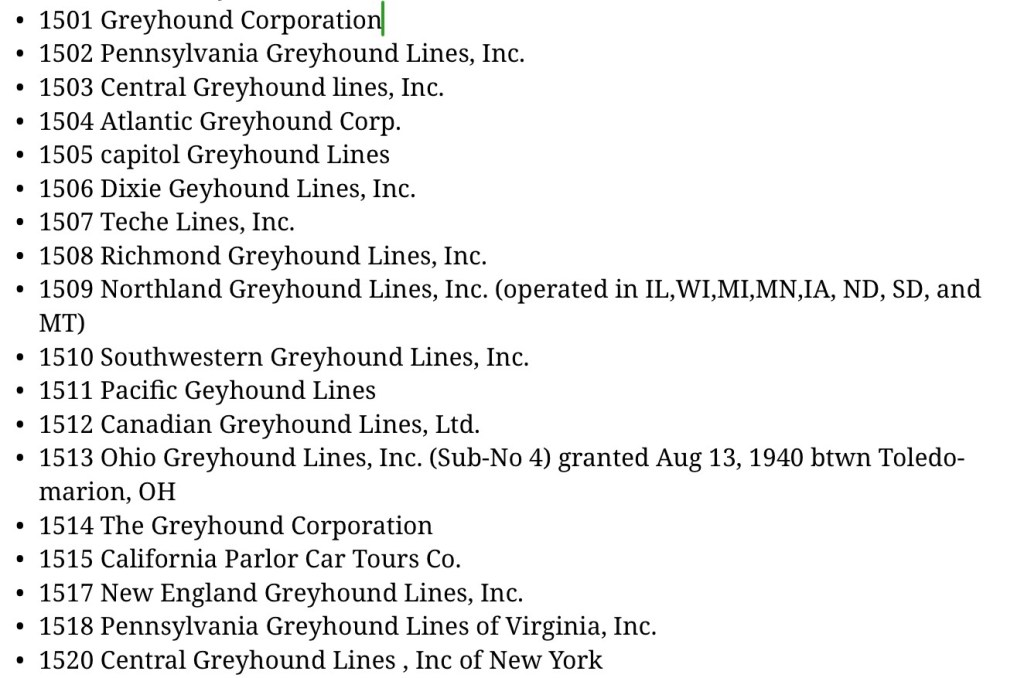
So, what evidence do I have to support the idea that applications were bundled when received by the Interstate Commerce Commission? What can be said about more than a dozen applications from very similar companies being given consecutive numbers? Were they received in the mail on the same day? Was the ICC alerted that so many would be coming so that the applications be held to one side and considered as one group? I’ll let you decide the answers to those questions. I will now list all of the Motor Carrier Docket Numbers and the company names the numbers were assigned to. Let me know in your comments what you think.
 lessthantruckloadhistory
Great article! Who was actually the first trucking company issued under the “grandfather” clause to be issued an ICC MC certificate? Your research is very much appreciated!
Michael Sheaffer
LikeLike
With fanfare and publicity the first application accepted under the grandfather clause was a Pennsylvania contract carrier for A&P Food Stores, a company named Eisenbach & Rodgers. They received ICC MC 1, a couple of years later since applications weren’t taken in numerical order .
LikeLike
I wonder what became of them. Would make an interesting article in the future.
LikeLike
In the early days of ICC regulation there were that I know of over a dozen carriers that only hauled for A&P, including AJ Boone of Charlotte, NC. At some point the carriers faded away, not much info as to why. It’s more difficult to find the dates when the early carriers ceased then it is to find when they received there certificates
LikeLike